


Mahjong Soul
Yostar Limited.
I approached Mahjong Soul as a decision rather than simply another mobile game to fill a few minutes. It is a free strategy game from Yostar Limited built around Japanese Mahjong and an anime-styled cast. That combination makes it immediately more inviting than a plain digital table, but it also means the game asks for more attention than a casual matching puzzle. After spending time with it, I see the main question as simple: do you want to learn and play Japanese Mahjong in a lively, character-focused setting, or are you looking for a faster, less demanding mobile diversion?
The game has a 4.6 average from around 28 thousand ratings, with over 500 thousand installs. Those figures suggest a healthy audience, but they do not remove the learning curve. Mahjong Soul is free to start, rated Teen, and supported by in-app purchases ranging from $0.99 to $79.99 per item. I would recommend approaching it as a competitive board game with presentation features, not as an idle collector or a game you can understand fully in one sitting.
What to consider before choosing it
The rules matter more than the anime presentation
The most important decision criterion is whether Japanese Mahjong itself interests you. The attractive characters and expressive presentation make the first launch feel approachable, yet the central challenge remains tile reading, hand building, timing, and risk management. If you already know the basics, you can concentrate on improving decisions. If you are new, you should expect to learn terminology and patterns gradually rather than relying on instinct alone.
I found that the visual style can create the wrong expectation for some players. The characters make the game look light and playful, but a match still rewards patience. A flashy hand is not automatically a good hand, and calling tiles simply because an option is available can leave you with fewer ways to improve. The best early habit is to ask what your hand can realistically become before chasing every attractive possibility.
Decide whether you want competition or relaxation
Mahjong Soul works best when I have enough focus to follow the table. It is possible to play a short session, but a serious round is not the same as opening a quick arcade game during a queue. I would choose it for an evening when I want a thoughtful contest, or for a regular routine in which I can review mistakes and slowly become more confident.
Related News

Threads in Real Life: Who Should Join, Lurk, or Leave

How SHEIN Turned Shopping Into an Endless Content Feed

How to Make Fortnite Feel Smarter on Mobile

Should You Switch to Microsoft Outlook on Mobile?

Why Gallery Keeps Pulling Users Back

X Review: Why Its Network Still Matters
That distinction is useful when comparing it with other strategy games. A card battler may offer faster turns and more obvious deck-building goals. A traditional puzzle game may be easier to pause mentally. A physical Mahjong set may be better for learning face to face with friends. This app sits between those options: it gives me the convenience of an always-available digital table while preserving the uncertainty and discipline of Japanese Mahjong.
Think about the learning experience
New players should not judge the game by their first few poor results. Mahjong has hidden information, imperfect draws, and decisions whose value may only become clear later. I recommend learning one concept at a time: first identify legal winning shapes, then understand why some hands are worth pursuing, and only afterward worry about advanced defensive choices. Trying to memorize everything at once makes the interface feel more complicated than it needs to be.
A practical workflow is to treat each match as a small lesson. Before discarding, notice which tiles are isolated, which tiles support several possible shapes, and whether your hand is becoming too narrow. When another player shows signs of progress, consider whether continuing your own attack is worth the danger. This way, even a loss provides a specific question to examine rather than becoming a vague feeling that the game was unfair.
Gallery
Check the platform and current build
The Android version requires at least Android 7.0 and is currently listed as version 4.0.21_GP. That makes the basic compatibility question straightforward for many phones, although I would still keep the operating system updated and leave room for the game to run comfortably. The game was released on November 26, 2019, so it is not an experimental newcomer; it has had time to establish its identity and audience.
Its Teen content rating is also worth considering if you are choosing a game for a younger player. The anime presentation may look harmless at first glance, but the rating means it should be treated as a teen-oriented title rather than an all-ages board-game app. For an adult player, that is unlikely to be a concern, but families should make the decision with the intended player in mind.
Understand what free means here
You can begin without paying, which is a meaningful advantage when deciding whether Japanese Mahjong suits you. I would use the free starting point to test three things: whether I enjoy the rules, whether I can follow the pace of a match, and whether the character-focused presentation adds value for me. There is no reason to spend immediately just because the game offers optional purchases.
The purchase range is broad, from $0.99 to $79.99 per item. That does not automatically make the game unsuitable, but it does make spending discipline important. I suggest deciding in advance whether you are happy to remain free-to-play, set a small entertainment budget, or avoid purchases entirely. The healthiest approach is to treat optional items as decoration or personal enjoyment, never as a reason to keep playing after you have stopped having fun.
Where Mahjong Soul is especially strong
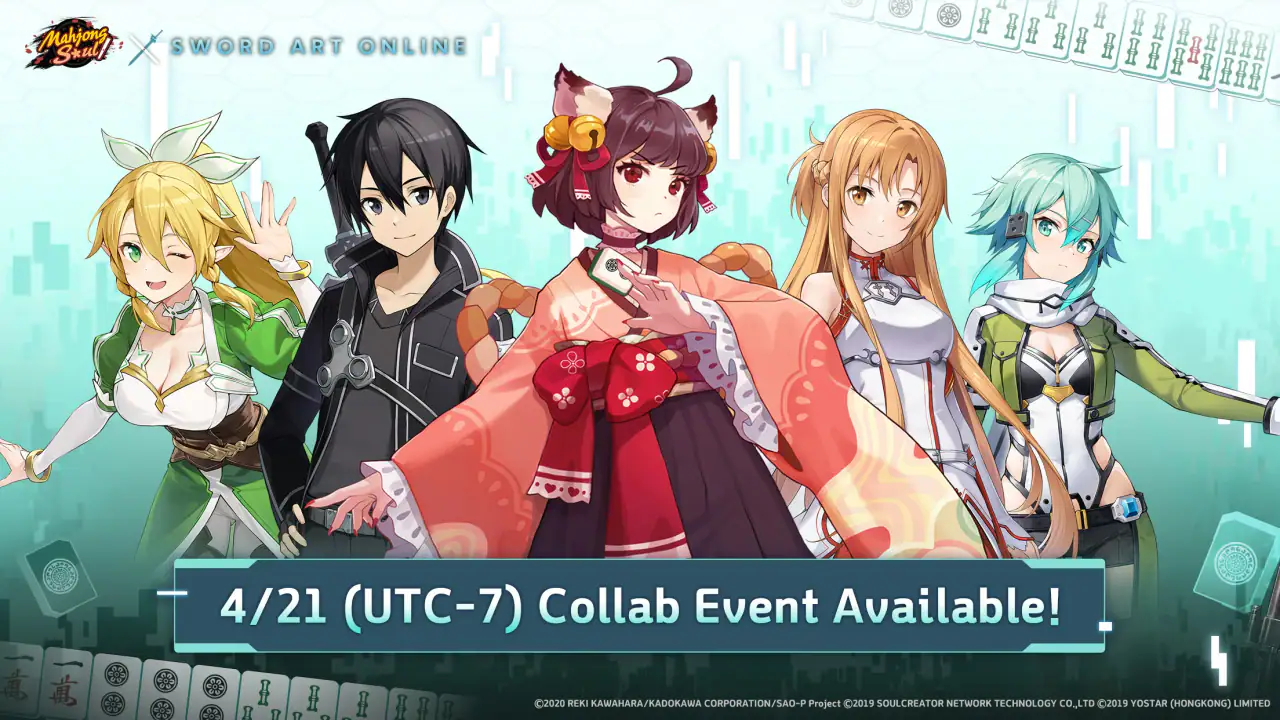
The clearest strength is the way it gives a traditional strategy game a distinct personality. The anime characters are not just a generic background pasted onto a board; they change the emotional feel of the session. A tense hand feels less dry than it would in a bare-bones interface, and the presentation gives newcomers a reason to return while they are still learning.
I also like the convenience of having a digital table available whenever I want to practice. A physical set requires people, space, and time. A general-purpose Mahjong app may offer rules but lack a strong identity. Here, the game makes the act of returning to Japanese Mahjong feel like entering a continuing hobby rather than opening a disposable calculator for tiles.
The real advantage is not the decoration; it is the combination of an approachable surface and a demanding underlying game. That balance can keep experienced players interested while giving beginners a softer entry than a completely austere rules interface. The presentation does not eliminate the need to learn, but it makes the learning process feel less intimidating.
Small habits that improve the experience
My first useful tip is to slow down during the opening phase. Early discards shape the possibilities left in your hand, and an automatic-looking choice can remove useful flexibility. I try to keep tiles that connect in more than one way until the hand gives me a clearer direction. This is more valuable than chasing a particular result before I know what the draw will provide.
My second tip is to separate progress from winning. A good session might involve recognizing a dangerous discard, abandoning an unlikely hand, or noticing that I held too many disconnected tiles. Those are improvements even when the final result is disappointing. Players who only measure success by immediate wins may quit before the strategic layer becomes enjoyable.
A third insight is that the character appeal can influence spending more than gameplay does. If I am drawn to a particular character or cosmetic element, I should wait until I understand how much that personal attachment matters to me. The game is still playable as a Mahjong experience without turning every attractive presentation feature into a purchase decision. Keeping that separation makes the free entry point much more useful.
A realistic everyday session
Imagine I have half an hour after dinner and want something more engaging than scrolling. I can open the game, play with a clear goal, and stop after examining one decision that went wrong. That is a good use case: the session has structure, but it does not require arranging a group of friends or setting up a physical table.
It is less suitable when I am distracted, rushing between tasks, or looking for a game that can be abandoned without thought. Mahjong rewards attention, and a careless discard can affect the rest of the hand. I would not choose it for a moment when notifications, conversation, or a short travel stop will constantly interrupt me.
How it compares with the usual alternatives
Compared with a plain Japanese Mahjong client, this game is more welcoming in tone and more memorable visually. A minimalist alternative may be better for someone who wants the rules and tiles without character presentation. That player may also prefer an environment that feels closer to a reference tool or a quiet practice table.
Compared with a traditional tabletop group, the app wins on availability and convenience, but it cannot replace the social atmosphere of sitting with people you know. If your main goal is teaching a friend in person, discussing every discard aloud, or enjoying the physical rhythm of a shared game, a real set remains the better choice.
Compared with fast mobile strategy titles, Mahjong Soul offers deeper uncertainty and less immediate feedback. It is a stronger fit for players who enjoy reading situations and accepting that good decisions do not guarantee a win. It is a weaker fit for anyone who wants constant rewards, short predictable rounds, or a clear upgrade path every time they play.
What switching to it actually involves
The cost of switching is mainly mental rather than financial. Since the game is free to start, the larger commitment is learning a new vocabulary and accepting that early matches may feel confusing. If you already play Japanese Mahjong elsewhere, the transition should be easier because your attention can move toward the app’s presentation and competitive rhythm rather than basic rules.
For a complete beginner, I would avoid installing it with the expectation of instant mastery. Give yourself a few sessions to recognize tile relationships and understand why a hand becomes difficult to complete. Keep a short note after each match: one discard you regret, one useful pattern you noticed, and one situation you did not understand. That simple routine turns the app from a sequence of results into a personal training tool.
There is also a social cost to consider. A character-driven competitive game can encourage longer sessions because the atmosphere makes returning appealing. I would set a stopping point before beginning, particularly if I am playing late at night. The game is more enjoyable when I choose the next match deliberately rather than continuing only because the previous one ended badly.
Who should choose it
I think Mahjong Soul is a strong choice for someone curious about Japanese Mahjong but reluctant to begin with a severe, technical-looking interface. It is also a good match for experienced players who want a more expressive setting for a familiar strategy game. Fans of anime-styled games may appreciate the personality, provided they are genuinely interested in the Mahjong underneath it.
I would be more cautious recommending it to someone who wants a completely casual puzzle, a story-first role-playing game, or a game that plays itself while they multitask. The central activity is still deliberate decision-making. Players who dislike losing because of uncertain draws may also find the experience frustrating, even when their choices were sensible.
My recommendation
I recommend trying Mahjong Soul if you want a free way to explore Japanese Mahjong and you like the idea of learning through repeated matches. Start without purchasing anything, give the rules time to settle, and use the anime presentation as an invitation rather than the entire reason to stay. The game’s strongest quality is that it makes a serious strategy pastime feel approachable without pretending it is effortless.
I would skip it if your priority is instant action, offline-style simplicity, or a purely social tabletop experience. In those cases, a faster strategy game, a minimalist Mahjong client, or a physical set with friends may suit you better. For everyone else, this is a thoughtful choice with enough personality to stand apart from ordinary board-game apps.
My final view is positive but measured. The free entry point makes experimentation easy, the Teen rating sets a clear audience, and Yostar Limited has shaped the game around a recognizable blend of Japanese Mahjong and anime charm. Just remember what you are installing: not a passive character collection, but a competitive strategy game that rewards patience. If that sounds appealing, Mahjong Soul is worth making room for in your mobile game rotation.
FAQs for Mahjong Soul
What is Mahjong Soul, and how does the game work?
Mahjong Soul is an online multiplayer game based on Japanese riichi mahjong. You compete against other players in real-time matches, build hands, declare riichi, and try to finish with the highest score. It combines traditional tile gameplay with anime-style characters, expressive emotes, ranked competitions, and collectible cosmetics. New players can use the tutorial and practice features to learn the basic rules before entering serious matches.
Is Mahjong Soul free to download and play?
Yes, Mahjong Soul is free to access, so you can begin playing without purchasing the application. However, the game includes optional in-app purchases and a gacha-style system for obtaining characters, outfits, decorations, and other cosmetic items. Spending money is not required to participate in regular matches, but users should review the available purchase options and manage their spending carefully, especially if they enjoy collecting limited-time content.
Do I need to know Japanese mahjong rules before playing Mahjong Soul?
You do not need previous experience to install Mahjong Soul, but understanding Japanese riichi mahjong is important if you want to perform well. The game provides tutorials, explanations, and beginner-friendly modes that introduce tile combinations, calls, scoring, and winning conditions. Even so, the rules can feel complicated at first, particularly furiten, yaku requirements, riichi decisions, and scoring. Expect to spend some time practicing before competitive matches become comfortable.
Does Mahjong Soul require an internet connection, and can I play offline?
Mahjong Soul is primarily an online game and requires a stable internet connection for its main features. Matches are played against real players or online opponents, while account progress, rankings, events, and many game resources are connected to the service. It is not designed as a fully offline mahjong app, so interruptions may affect a match. A reliable Wi-Fi or mobile data connection is recommended for the smoothest experience.
Is Mahjong Soul suitable for children and casual players?
Mahjong Soul can be enjoyable for casual players, but its suitability depends on the user’s age and experience with online games. The anime presentation is colorful and approachable, although the strategic rules may be challenging for younger or completely new players. Because it includes online interaction, competitive rankings, events, and optional purchases, parents should review the game’s content and enable appropriate device restrictions before allowing children to play.
Pros
- Generous free-to-play access with no mandatory purchase to compete.
- Cross-platform accounts make it easy to continue matches on different devices.
- Distinct anime characters add personality and collectible appeal.
- Ranked and casual modes suit both competitive and relaxed players.
- Spectator and replay features help users learn from completed matches.
Cons
- Gacha mechanics can make collecting favorite characters expensive.
- Mahjong rules may feel overwhelming for players completely new to riichi.
- Matches require a stable connection and offer limited offline play.
- Some cosmetic and character content is locked behind premium currency.
- Random draws can make progression feel slow without regular play.


